R2H2 Desktop App
A modelling for optimised wind-to-hydrogen energy systems.
Desktop Application
 Package |
PyPI: r2h2 → |
 Source |
RenewableTools/R2H2_app → |
| new_releases Latest | v1.2.38 |
R2H2 Desktop App
The Renew2H2 (R2H2) modelling tool is a Python-based simulation software designed to evaluate and optimize off-grid wind-to-hydrogen energy systems. It allows researchers and engineers to simulate how a plant will behave over multiple years when subject to highly intermittent, real-world wind conditions.
Instead of just calculating simple averages, it models the complex, hour-by-hour dynamic relationship between power generation and system hardware wear-and-tear. The tool operates through four core, interconnected modules:
- Wind Power Input Module
- Electrolyser Operation & Degradation Module
- Battery Operation & Storage Module
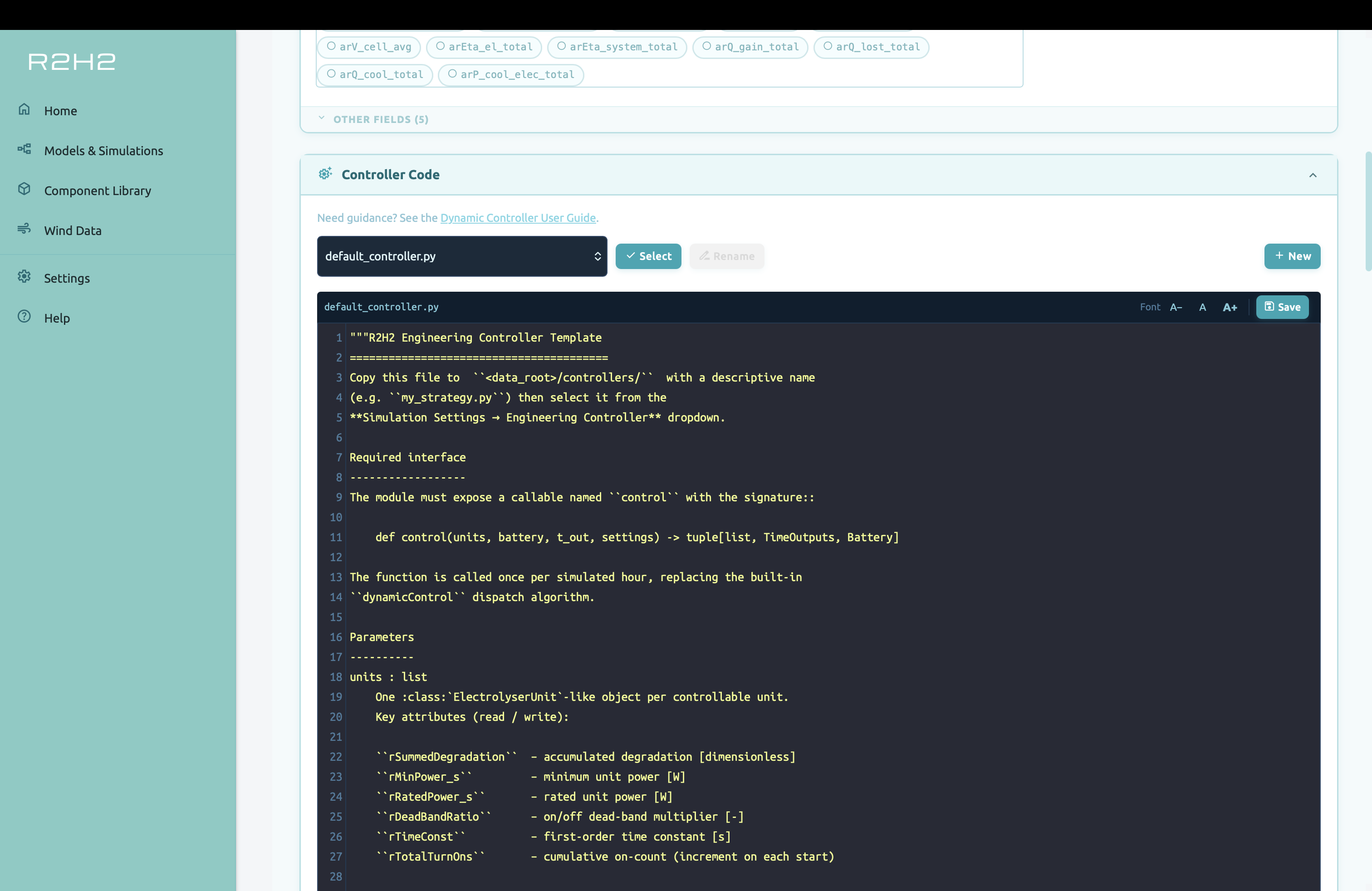
- System Controller Module
By running these modules simultaneously, the tool allows users to find the exact economic sweet spot— balancing the upfront costs of battery hardware against the financial losses of replacing degraded electrolysers early—to ultimately minimize the Levelised Cost of Hydrogen (LCOH).
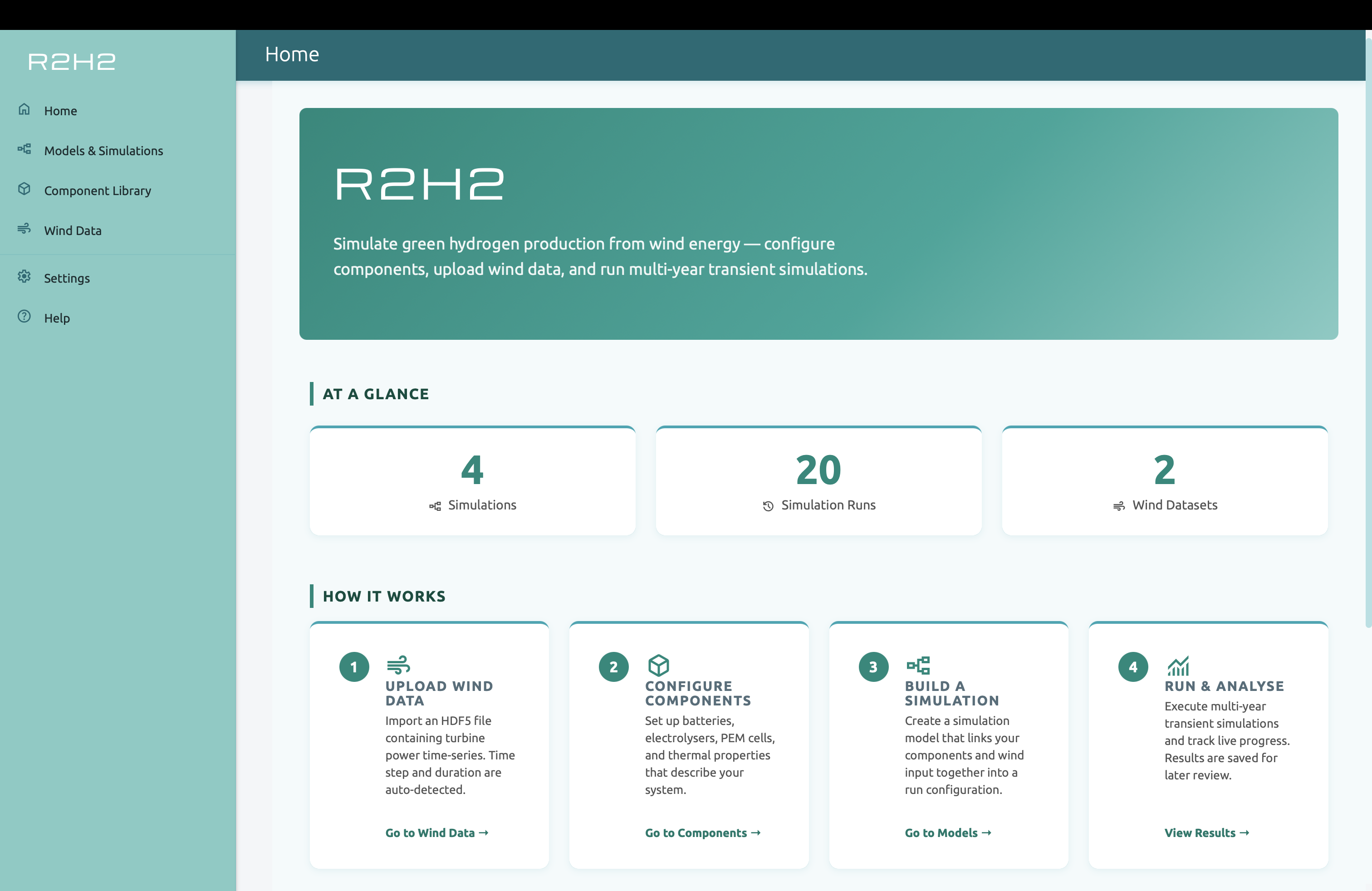
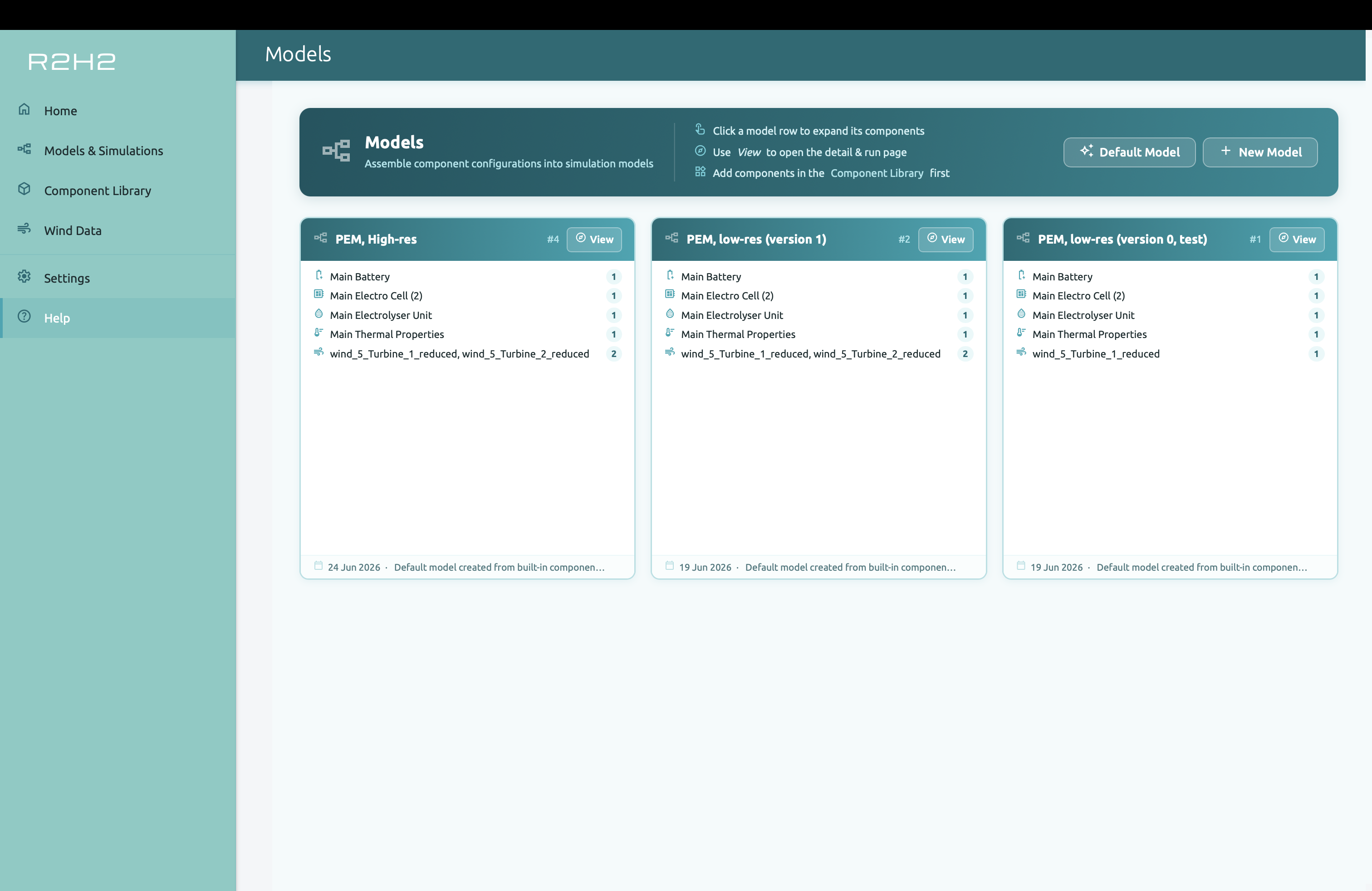
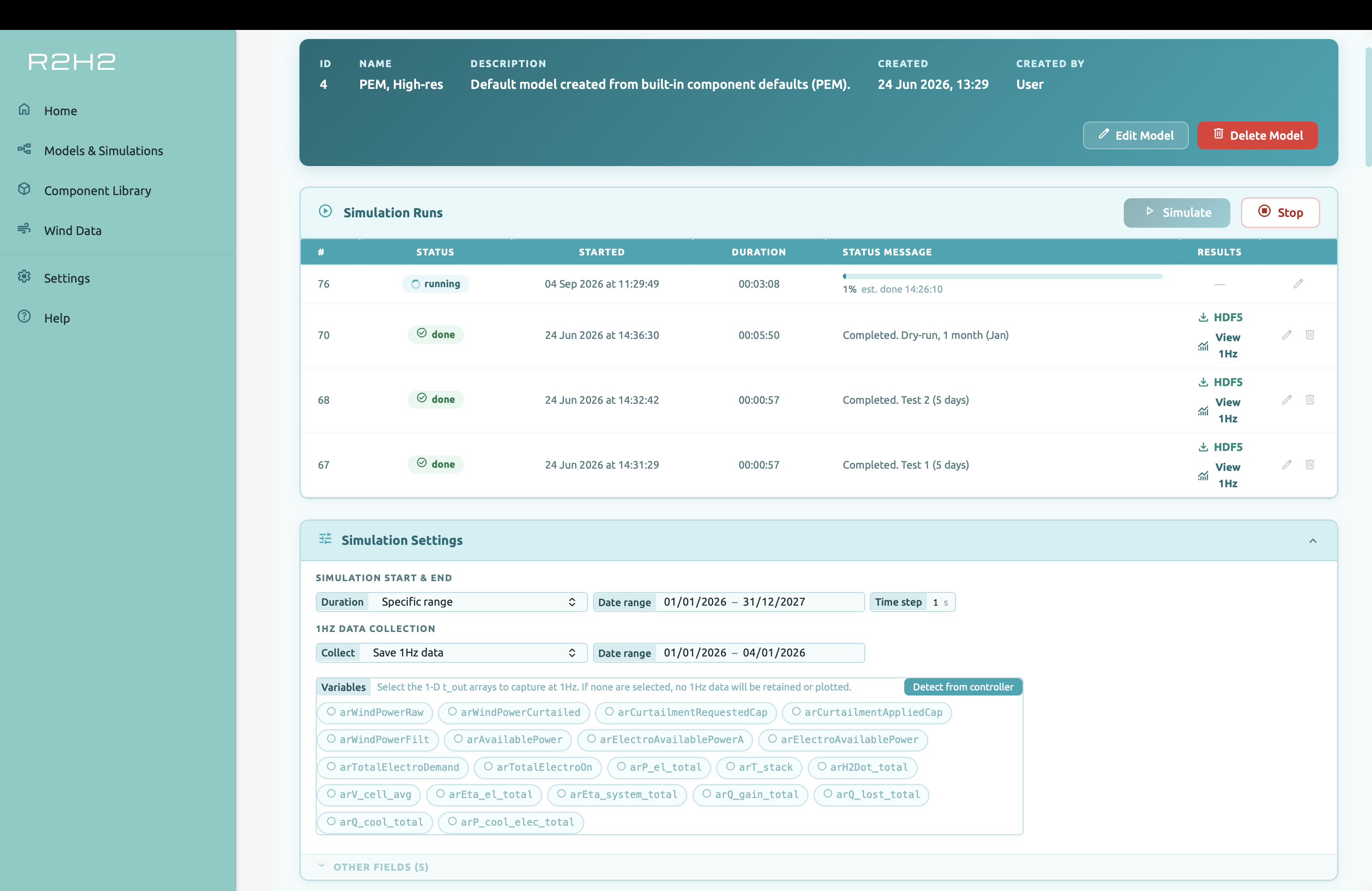
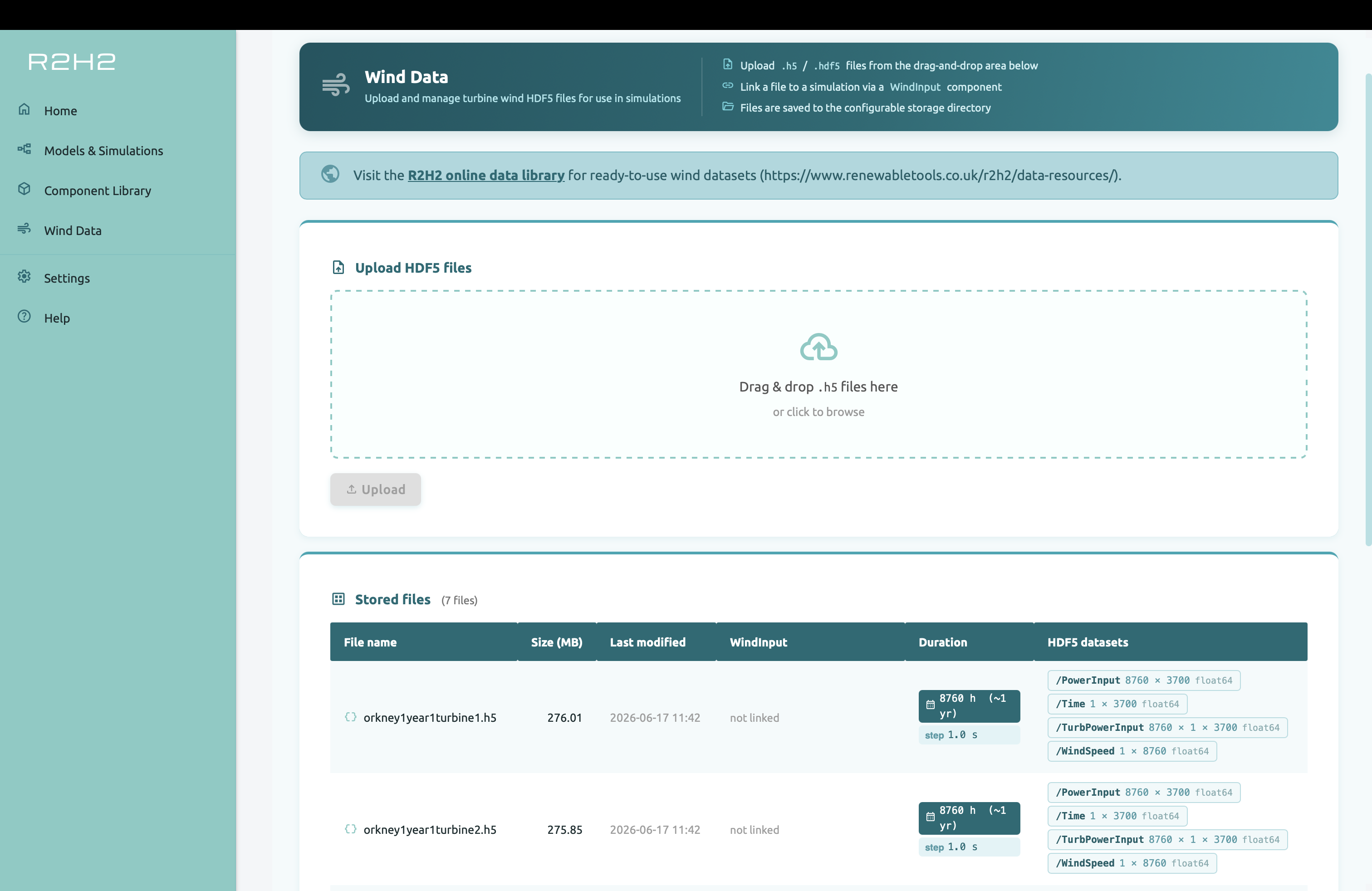
The R2H2 Desktop application is a fully integrated UI-based tool, running Python in the background. Unlike most pip install modelling tools, R2H2 is run entirely through the user interface, keeping the source code free from hard-coded user-specific information. R2H2 is instead designed to be generic, built around a fully integrated relational database, where users can build components and systems that they can browse, edit, run, and re-run, over and over again. In other words, R2H2 is designed to behave more like a packaged software tool, and is more than just a user interface.